
Areas of interest
(click for details)

Overview
Much of the stuff of life is made of polymers (molecules composed of strings of similar repeating units) or molecular assemblies (structures that are made when nanoscale interactions cause molecules to stick to each other). DNA, proteins, and carbohydrates are examples of biological polymers, while cell membranes, viral capsids, and collagen fibers are examples of assemblies.
The Schroeder lab is inspired by systems in biology that showcase the ability of polymers and assemblies to finely control the movement of matter, heat, or electric charge. These systems are often exquisitely complex and drive some of life’s most impressive and essential functions. Skeletons that last a lifetime are built by such processes: calcium and phosphate ions are pumped by protein-based machines across self-assembled membranes, then stabilized with more proteins before finally being allowed to form crystals within collagen fibrils to build bones. Another example: in “excitable” tissues such as neurons and muscles, switch-like channels made of protein and a circuit architecture made of self-assembled lipid membranes ultimately direct the bioelectrical signals that allow us to think and move.
Our group seeks to take design cues from evolution to develop new and useful configurations of matter and energy in which polymers and assemblies control transport processes and phase changes.
In particular, some of our areas of interest are as follows:
1. Controlling crystal growth via macromolecular additives
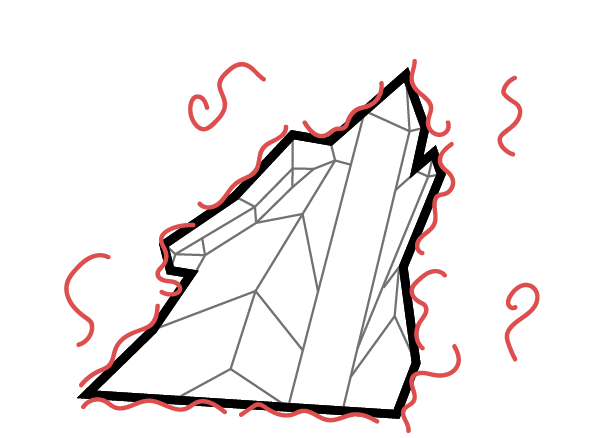
Preprint in this area: Patoary M.K., Schroeder T.B.H., et al. “Mineral Deposition from Liquid Precursors Triggered by Complementary Polyelectrolytes.”
doi:10.26434/chemrxiv-2025-hpqg5
Crystalline materials from the nanoscale to the macroscale are highly valued for their favorable optical, electrical, and mechanical properties. A crystal’s morphology and formation kinetics can be affected by other particles in the crystallizing solution. Such additives can nucleate crystallization using areas of charge density that match the periodicity of the crystal lattice or, conversely, inhibit nucleation by stabilizing metastable precursors. Once a crystal nucleus has formed, additives can inhibit or promote growth by binding to the surface lattice.
Our group seeks to design macromolecular additives to exert control over crystal nucleation and growth; this work may have impact in a variety of contexts such as material fabrication, thermal energy release from phase change materials, textile finishing, and drug formulation.
2. Development of sustainable functional materials from mineralized biopolymers

Across the animal kingdom, anatomical structures such as hair, fingernails, and feathers are composed of a protein called keratin. Some of these keratin-based materials (notably horn, tortoiseshell, and baleen) have been crafted into useful implements for most of human history. Elsewhere in animal physiology, collagen serves as a fibrous scaffold for the growth of bones, teeth, and antlers. These essential materials each consist of biopolymers that are mineralized to varying degrees: that is, they contain deposits of inorganic salts that impart functional properties.
Our group seeks to develop new materials, including functionalized textiles and biodegradable alternatives to petroleum-derived plastics, by experimenting with ways to combine sustainably sourced biopolymers and inorganic salts.
3. Creating ionic circuits in polymers and gels
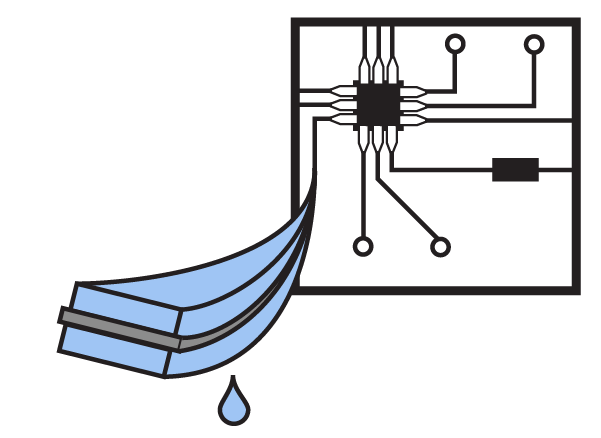
Paper in this area: Yuan Y.-m., Schroeder T.B.H. “Phase-Change Solvents for Thermally Switchable Ion Conduction in Organogels.” Advanced Materials, 2025, e19014 doi:10.1002/adma.202519014
The past century of technological progress has been defined by electronic circuitry made of metals and semiconductors. The most versatile and powerful computing schemes yet known, however, are the nervous systems of living beings, which are ultimately circuits based on the transport of ions through aqueous media. Elsewhere in biology, bioelectricity controls the contraction of muscles — or, more exotically, the discharge of hundreds of watts by the specialized organs of fish such as the electric eel. Such systems exhibit several advantages over traditional electronics based on the materials they are composed of: they may be soft, biocompatible, and transparent, they may leverage solution-phase chemistry, and they may derive electrical power from gradients in chemical potential.
Taking inspiration from these systems, our group seeks to advance the development of synthetic ionic circuits in solvated polymer systems such as textiles and gels. Goals include the development of neuron-like pairing of sensors and actuators across long distances and the generation of power from water evaporation.
 Schroeder Research Group